Multiple Windblown Trees
This course follows the H&W Multiple Windblown Trees learner workbook. Work through the 16 modules in order, watch each illustrated video and pause for its knowledge check before continuing to the explanation. Use the learning material alongside instructor demonstrations and supervised practical training.
Multiple Windblown Trees
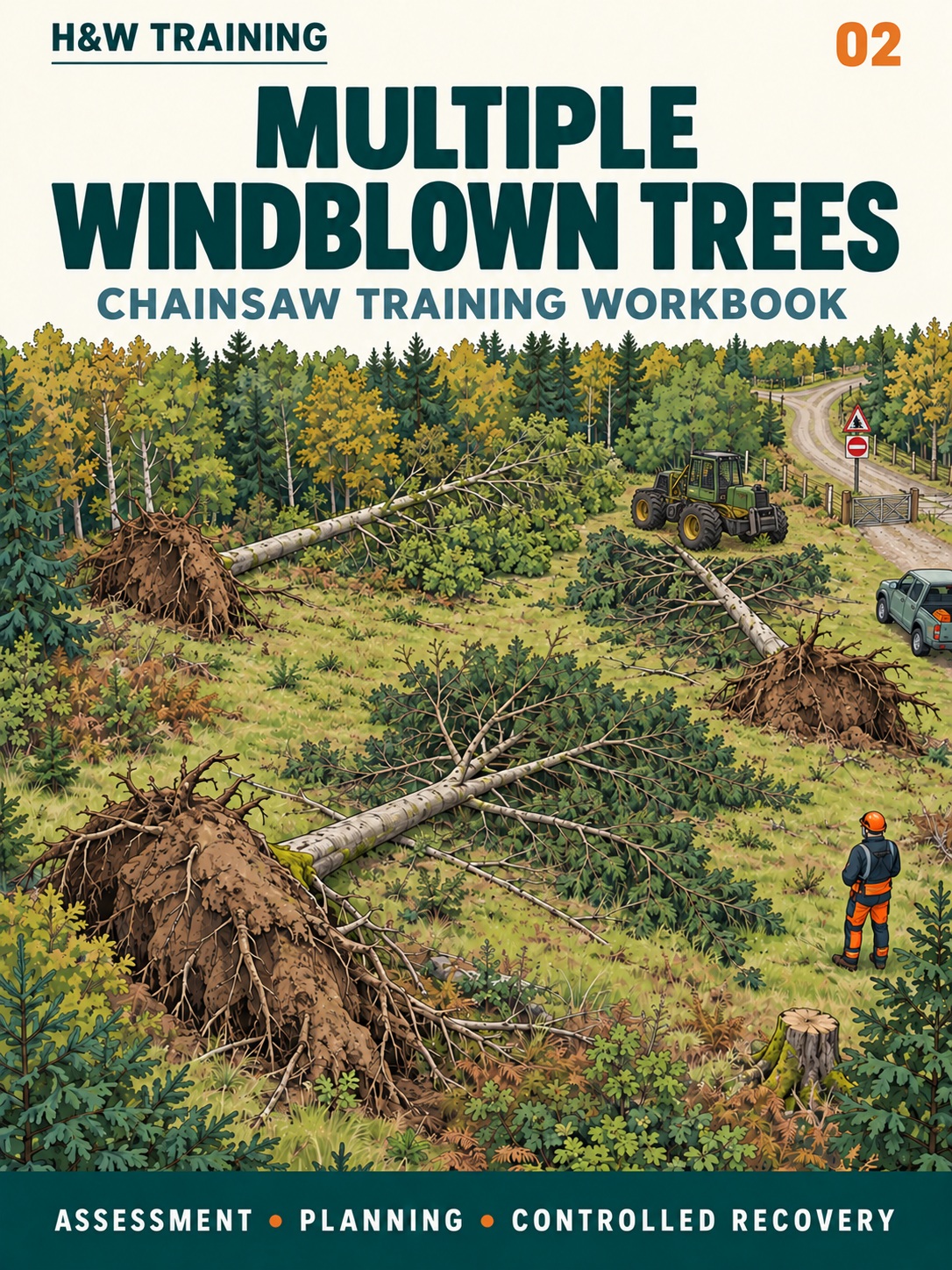
Assessment, planning and controlled recovery
This course follows the H&W Multiple Windblown Trees learner workbook. Work through the 16 modules in order, watch each illustrated video and pause for its knowledge check before continuing to the explanation. Use the learning material alongside instructor demonstrations and supervised practical training.
Multiple and catastrophic windblow
Multiple windblown trees: Two or more trees that may be interwoven but can be safely accessed to allow cutting operations. Chainsaw work requires a site-specific assessment, competent operators and an agreed safe method.
Catastrophic windblown trees: A whole timber crop that has been blown down and cannot be safely accessed for cutting operations. This must be managed by machine operations. Do not enter the tangle to create access with a chainsaw.
Choosing the method: Consider mechanised clearance first. Safe access alone is not enough: chainsaw work also needs a safe cutting position, usable escape routes and control of tree movement. If these cannot be achieved, stop and arrange machine operations, even for a smaller group of trees.
Reassess after each cut or machine movement. Stop if access, escape, support or communication changes.
Before training starts
Bring evidence of chainsaw maintenance and cross-cutting, felling trees up to 380 mm, and felling medium trees over 380 mm and up to 760 mm, or accepted equivalents. A qualification for felling trees over 760 mm is not required. H&W will check that your prior training and experience meet the booked course requirements.
Agree the permitted tree conditions, diameters, methods and saw/guide-bar combinations with your instructor. Confirm suitable people, equipment, communication and emergency arrangements before practical work.