Emergency Tree Work Planning
Plan emergency tree-work responses: assess hazards, protect people, coordinate specialists and prepare a safe system of work. Includes eight modules, three scenarios and a learner workbook.
H&W Training | Forestry and arboriculture
Emergency Tree Work Planning
Assess the situation. Protect people. Agree a safe response.
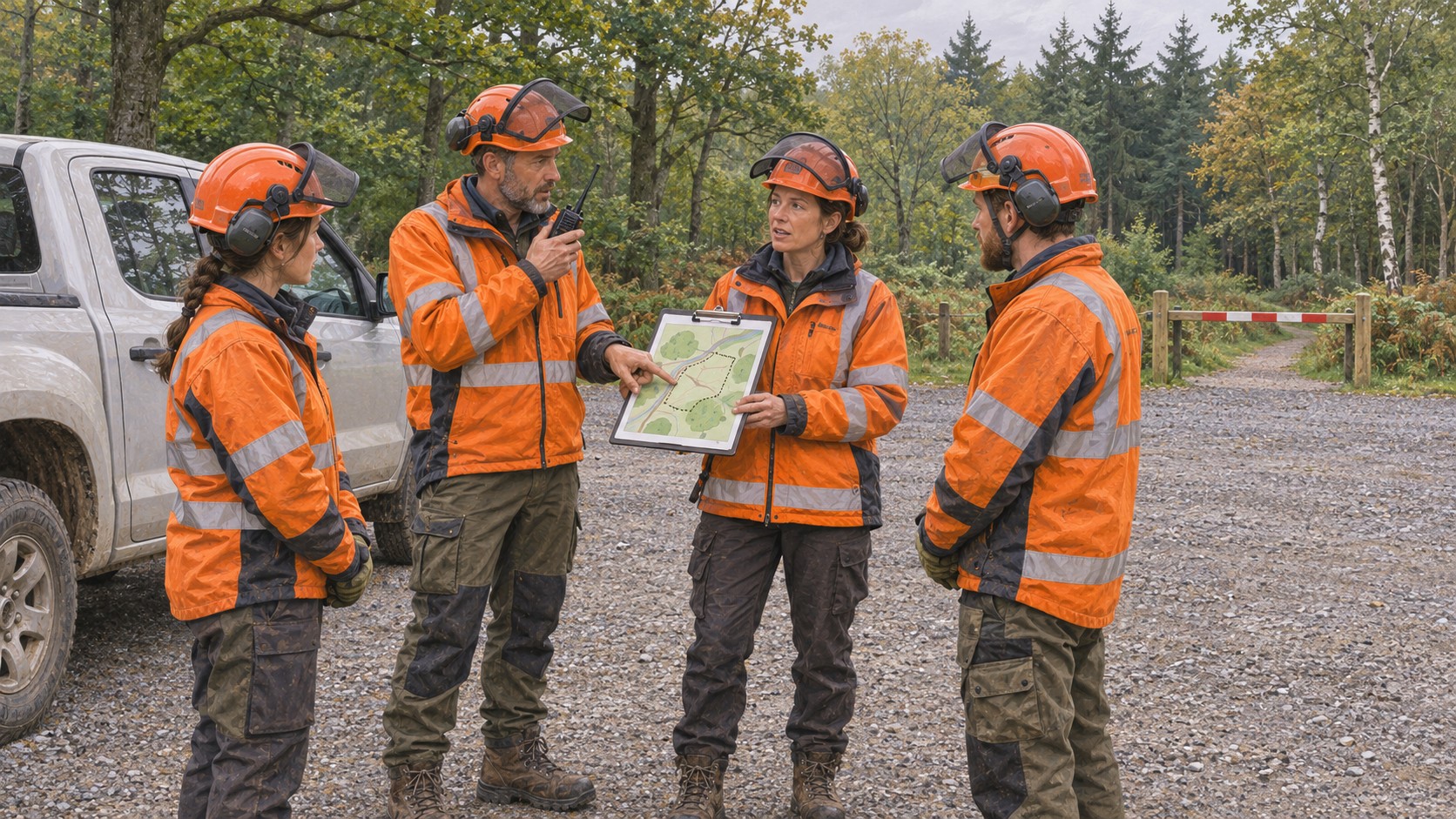
A practical planning course for people who receive, organise or supervise emergency tree-work call-outs.
Learn how to turn an incomplete report into a defensible plan: establish priorities, recognise complex hazards, involve the right agencies, allocate competent resources, agree start conditions and hand the site back safely. Examples cover forestry tracks, public roads, utilities, buildings, water and storm-damaged trees.
What you will learn
- Gather call-out information and prioritise a changing situation.
- Prepare and review a site-specific risk assessment and emergency plan.
- Recognise when utilities, structures, water, traffic or tree instability require specialist assistance.
- Check contractor qualifications and current competence, then match people, equipment, communications, PPE and rescue resources to the task.
- Explain when to proceed, stop, defer or escalate a work phase.
- Plan environmental controls, phased clearance, records and handover.
Learning through site pictures
See the hazards. Explain the plan.
Work through eight visual activities alongside the lessons. Each one asks you to distinguish observations from assumptions, identify what still needs checking and explain the decision before the next work phase.
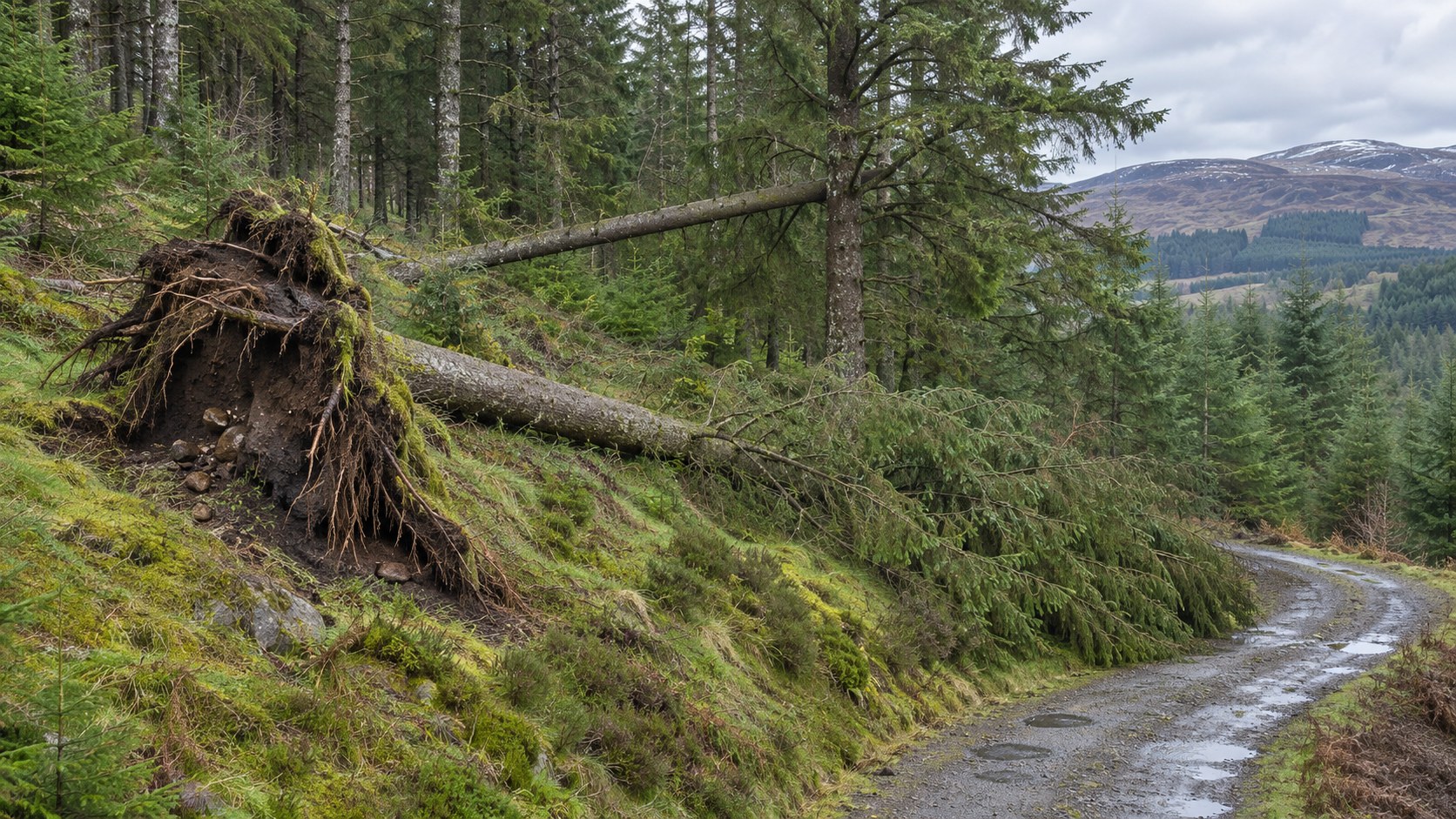 Assess roots, support and steep ground
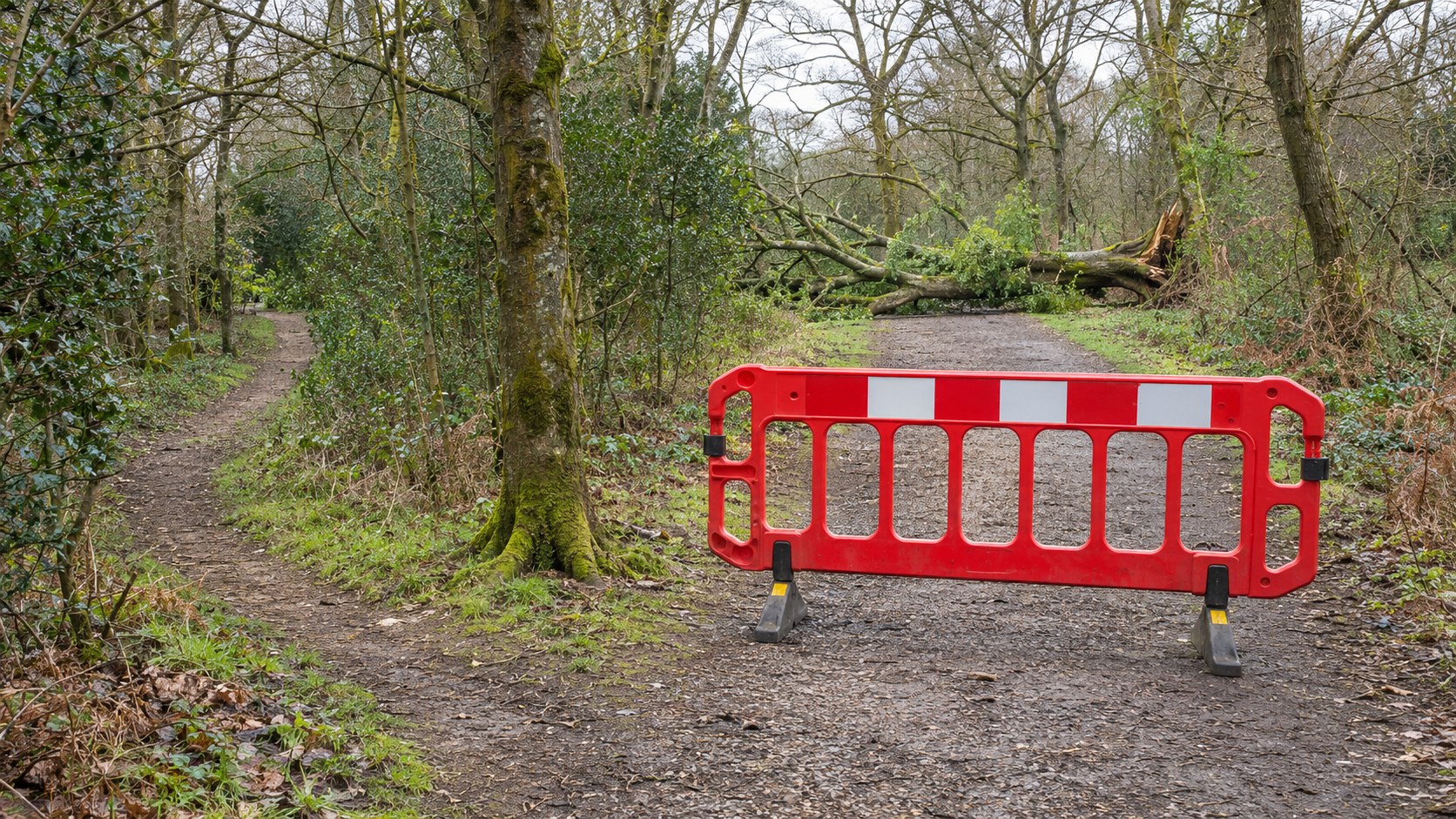 Find gaps in public access control
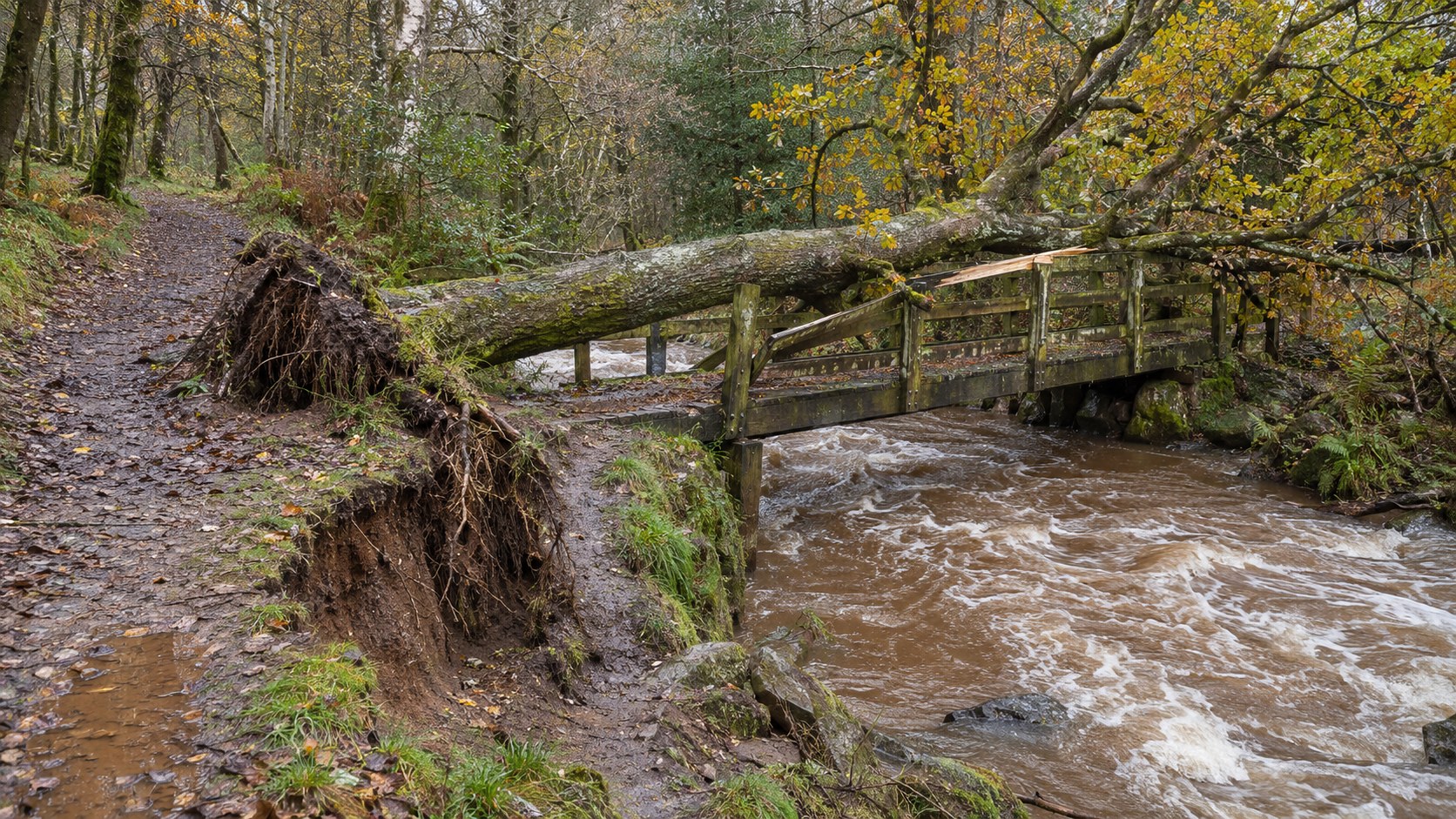 Plan a response at a damaged crossing
Training scenarios support planning judgement. They do not prescribe safe distances or operational cutting, climbing, rigging or lifting methods.
Your learning route
Work through the modules in order. Complete the workbook, then use the three scenarios and practice questions for tutor-led discussion. Bring your reasoning and any uncertainties to the session.
Download printable workbook – A4 (40 pages)
Download A3 fold-and-staple workbook
Same learner content in two printing formats. The A3 file is already arranged for a ten-sheet booklet: A3 landscape, two-sided short-edge binding, one PDF page per side; Booklet mode off. A compatible booklet finisher is needed for automatic folding and centre stapling. For multiple copies, send each complete workbook as a separate one-copy job; do not combine several copies into one long document.
- Module 1: Call-out readiness and prioritisation
- Module 2: Site assessment and stop-work decisions
- Module 3: Utilities, roads, structures and water
- Module 4: Safe systems, resources and team communication
- Module 5: Emergency arrangements, PPE and welfare
- Module 6: Environment, phased response and handover
- Module 7: Scenario workshop and practice questions
- Module 8: Downloads and assessment preparation
Who the course is for
Call-out coordinators, forestry and arboricultural supervisors, managers and operatives developing emergency-planning responsibilities. The tutor should review each learner’s experience and support needs. The learning covers planning decisions; specialist operational tasks require their own competence and authority.
Use realistic practice safely
Apply the course using maps, photographs, scenario briefs and controlled observations. Do not create a real emergency or enter an unsafe area for an exercise. Any site activity needs its own competent supervision, assessment and emergency arrangements.
H&W Training | 8 November 2026 | Version 1.2
Log in or create an account to access this course.
Register
New here? Create an account to request access. We will email you when it has been approved.